The Higgs Boson Was Discovered in 2012 — But Its Real Impact Is Still Unsettling
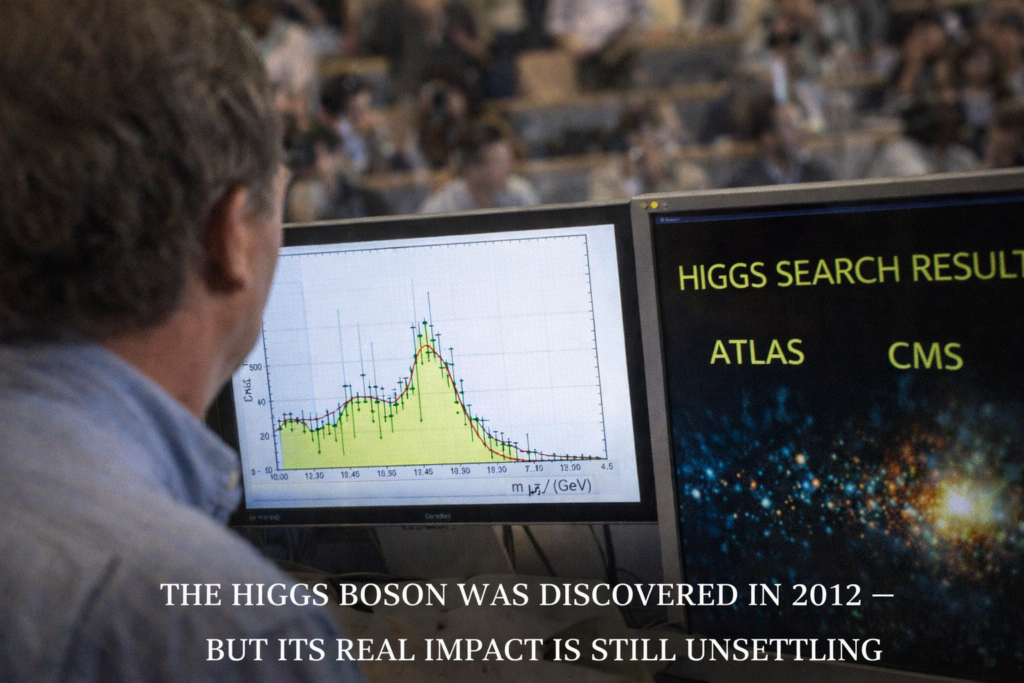
On July 4, 2012, physicists gathered in a packed auditorium at CERN watched a set of graphs appear on a screen. The lines curved upward. The error bars narrowed. Applause broke out before the presentation had even finished. The Higgs boson had been found. For the public, it sounded like closure—the final missing piece of modern physics neatly slotted into place. For scientists, the moment felt stranger than that. Because the discovery didn’t end a story. It destabilized one. The Particle That Was Never Supposed to Be Comfortable The Higgs boson was proposed in the 1960s as a mathematical solution to an uncomfortable problem: why particles have mass at all. Without it, the equations of the Standard Model collapse. With…
— Preview ends here
Most articles stop at the surface. This piece goes deeper — adding context, nuance, and implications that help you understand why the topic matters, not just what happened.