Edwin Hubble’s Expanding Universe: The Observation That Changed the Size of Reality
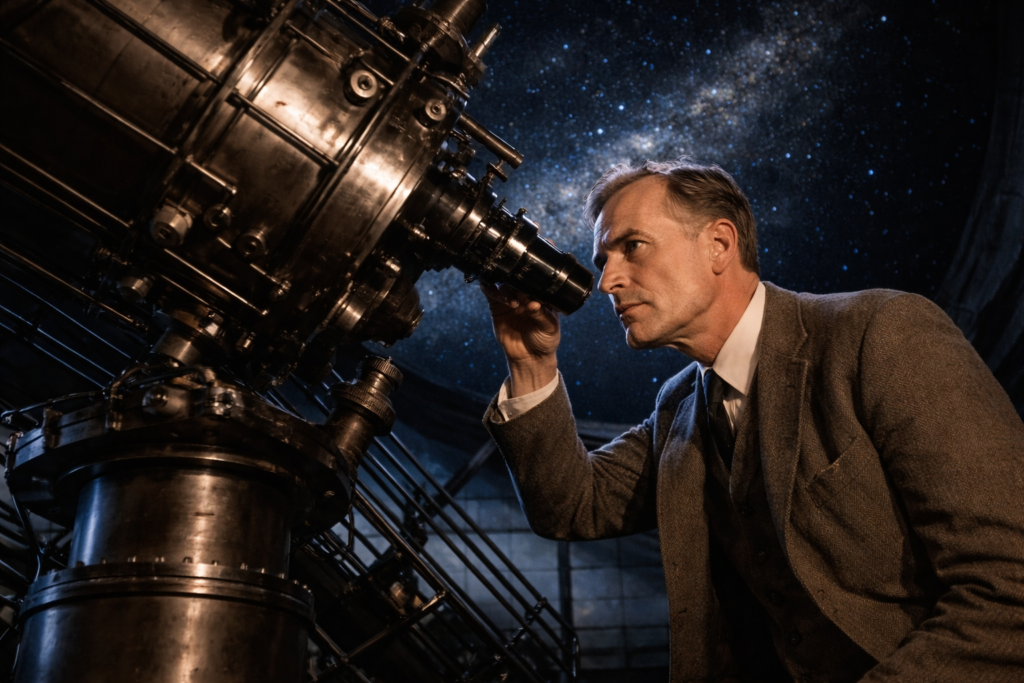
In the early 20th century, the universe was thought to be small, calm, and finished. Stars filled the Milky Way. Nebulae were fuzzy clouds inside it. Space existed, but it wasn’t doing much. Then one astronomer pointed a powerful telescope at the night sky and realized something unsettling. The universe was not sitting still. It was growing. A Sky That Was Supposed to Be Settled At the time, most scientists believed the Milky Way was the entire universe. Spiral nebulae—faint, swirling smudges—were assumed to be nearby gas clouds. The idea that they might be entire galaxies, unimaginably far away, felt excessive. Space already seemed large enough. There was no reason to make it bigger. The Man Behind the Telescope :contentReference[oaicite:0]…
— Preview ends here
Most articles stop at the surface. This piece goes deeper — adding context, nuance, and implications that help you understand why the topic matters, not just what happened.