Edwin Hubble Discovered the Universe Was Expanding — and Shocked Everyone
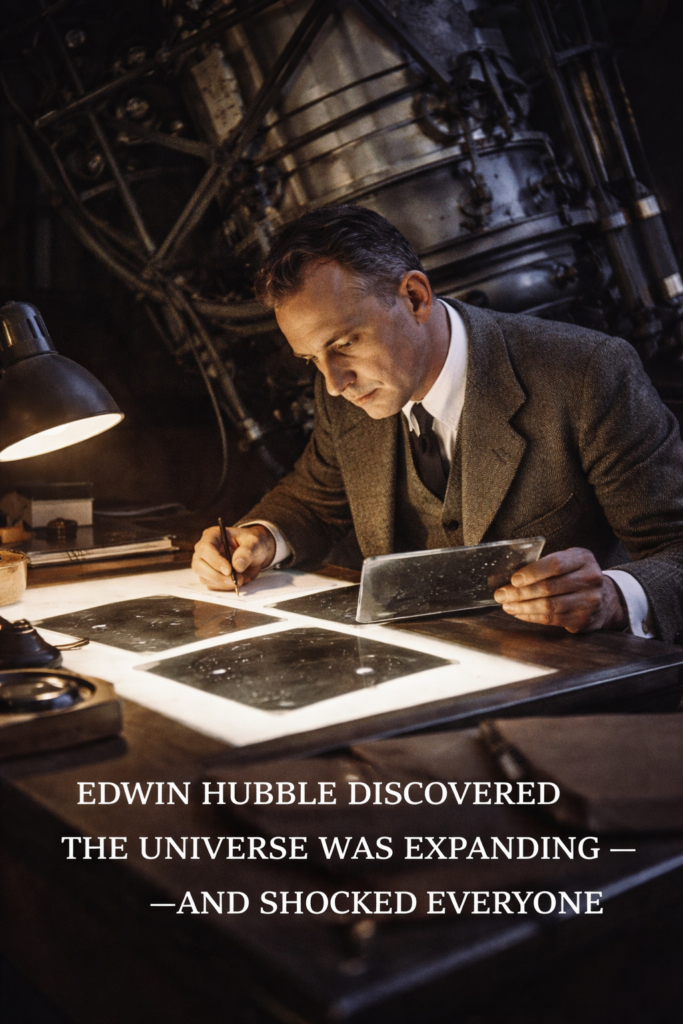
In the late 1920s, astronomy still operated under a comforting assumption: the universe was static. Stars moved, planets orbited, nebulae drifted—but the cosmos itself was fixed, eternal, unchanging. Then Edwin Hubble looked more carefully. What he found did not just revise astronomy. It unsettled the idea of permanence itself. The Question That Refused to Stay Small At the time, astronomers debated the nature of faint, fuzzy objects called spiral nebulae. Were they clouds inside the Milky Way, or entire star systems far beyond it? The distinction mattered more than it seemed. If those nebulae lay outside our galaxy, the universe was vastly larger than anyone had imagined. Hubble set out to answer that question using Cepheid variable stars—objects whose brightness…
— Preview ends here
Most articles stop at the surface. This piece goes deeper — adding context, nuance, and implications that help you understand why the topic matters, not just what happened.