Edison’s Hearing Aid Experiment: The Early Tech That Amplified Sound
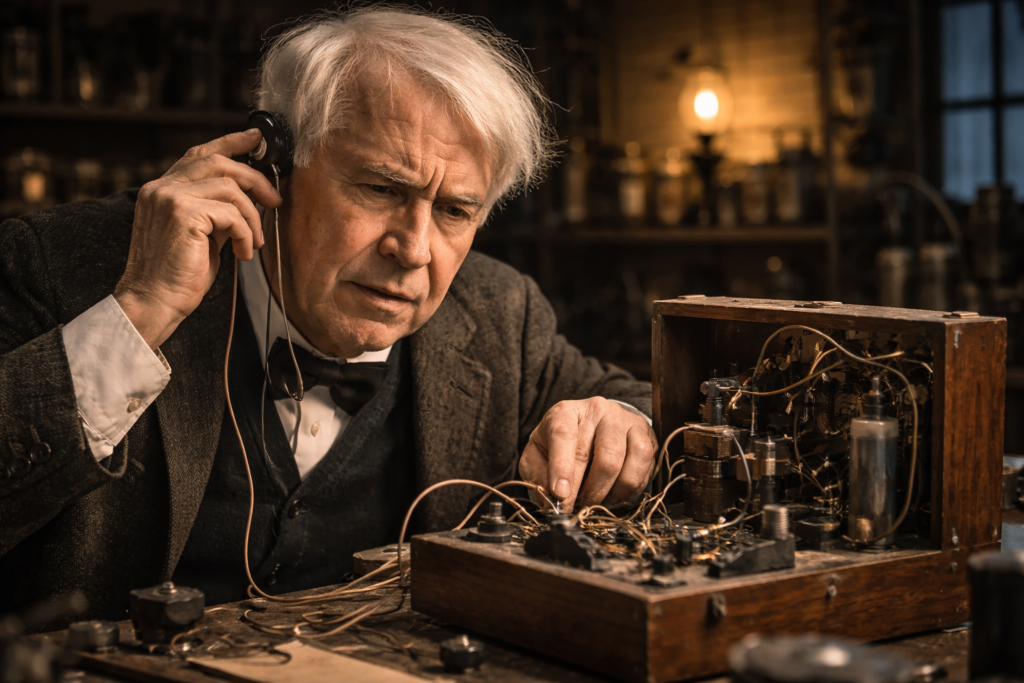
The workshop was crowded with coils of wire, glass bulbs, wooden housings, and half-assembled mechanisms. Thomas Edison stood near a cluttered bench, listening closely to a faint clicking sound emerging from a crude device pressed against his ear. He leaned in. Adjusted a contact point. Listened again. The sound grew slightly louder. It wasn’t music. It wasn’t speech clarity. But it was amplification. And at a time when electronic sound amplification barely existed, that alone was remarkable. Before Electronic Hearing Assistance For centuries, people with hearing loss relied on mechanical devices. Ear trumpets. Funnels. Resonance chambers. These tools gathered sound waves and directed them into the ear. They did not amplify sound. They merely concentrated it. True amplification required converting…
— Preview ends here
Most articles stop at the surface. This piece goes deeper — adding context, nuance, and implications that help you understand why the topic matters, not just what happened.