Alexander Fleming’s Moldy Dish: The Accidental Discovery That Led to Antibiotics
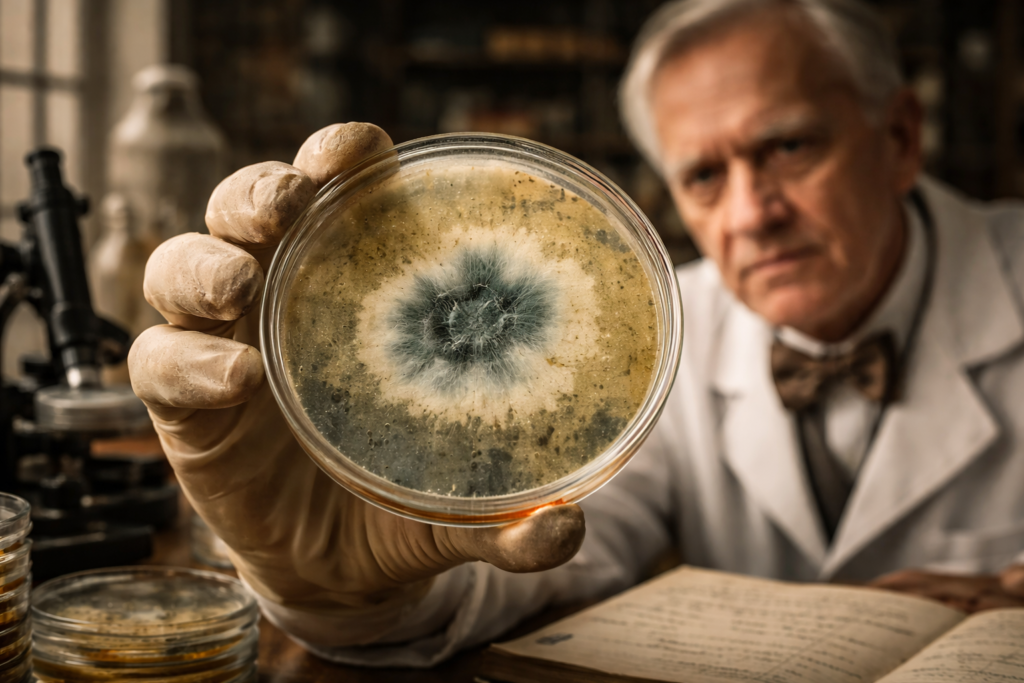
In 1928, a forgotten petri dish sat quietly on a cluttered laboratory bench in London. No alarms. No assistants rushing in. No sense that medicine was about to change forever. It was just mold. Greenish. Fuzzy. Annoying. Most scientists would have thrown it away without a second thought. Contaminated experiments were routine failures, not breakthroughs. But the man who noticed this dish didn’t throw it out. He leaned closer. And by doing so, he altered the future of human survival. A Scientist Known for Mess, Not Miracles :contentReference[oaicite:0] was not chasing a grand cure when he returned from vacation that September. He was a bacteriologist studying staphylococci—common bacteria responsible for boils, wounds, and deadly infections. Fleming’s lab was famously untidy.…
— Preview ends here
Most articles stop at the surface. This piece goes deeper — adding context, nuance, and implications that help you understand why the topic matters, not just what happened.